1. Introduction: The Diamond of the Ceramic Globe
In the high-stakes sector of sophisticated products, where performance is determined in microns and nanoseconds, one compound stands as a testimony to human resourcefulness and the power of chemistry. Silicon Carbide Ceramics are not just elements; they are the silent guardians of modern human being. Birthed from the fusion of silicon and carbon, this material possesses a paradoxical nature that defies the constraints of typical ceramics. It is more challenging than virtually any compound on earth, yet it conducts heat like a steel. It is brittle in its raw kind, yet engineered to hold up against the crushing forces of industrial generators. For years, these ceramics have been the unnoticeable armor securing the equipment that powers our cities, thrusts our lorries, and cleanses our air. This is the tale of just how a straightforward chemical reaction evolved right into a technological wonder, improving sectors from the tiny level of semiconductors to the large scale of ballistics. We are not just telling the tale of a material; we are chronicling the advancement of strength itself.
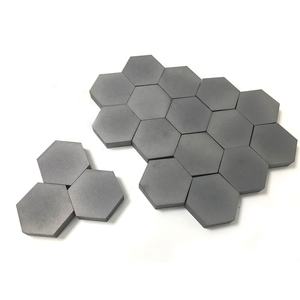
(Silicon Carbide Ceramics)
2. Brand Origin: The Spark of Development
The trip of Silicon Carbide Ceramics begins not in an immaculate research laboratory, however in the intense ambition of the late 19th century. Our brand name ethos is rooted in the serendipitous exploration of this material, a tale that mirrors our very own ruthless search of the difficult. The pursuit began with a desire to synthesize diamonds, the utmost symbol of firmness. While the sorcerers of market did not locate the gems they looked for, they came across something much more versatile. In 1891, Edward Goodrich Acheson discovered Carborundum, a product that was almost as difficult as diamond but possessed distinct residential properties that made it essential for industry. This accidental birth is the keystone of our philosophy. Our team believe that true advancement typically develops from the unexpected, and our brand was founded on the concept of using these unanticipated properties to fix the world’s most difficult design obstacles.
From Grit to Magnificence. The very early background of our product was specified by abrasion. For the first half of the 20th century, Silicon Carb. ide was valued mostly for its ability to erode various other products. It was the scouring pad of market, essential yet unglamorous. Nevertheless, our owners saw a deeper capacity in the crystal lattice. They recognized that a product efficient in abrading steel could also be engineered to resist it. This understanding sparked a transformation in materials scientific research. We changed our focus from merely getting rid of material to shielding it. The shift from unpleasant grit to structural ceramic was a pivotal moment in our brand’s history, marking our evolution from a supplier of basic materials to a maker of engineered solutions.
The Cold War Catalyst. Real velocity of our brand name’s growth took place throughout the space race and the Cold Battle. As humanity reached for the stars and countries stockpiled rockets, the requirement for materials that could hold up against severe warm and radiation ended up being extremely important. Silicon Carbide became a hero product. Its ability to maintain architectural stability at temperatures going beyond 1600 ° C made it the best prospect for rocket nozzles and thermal barrier. This period built our identification. We learned that our ceramics were not practically longevity; they were about allowing mankind to explore the unidentified and safeguard the known. The high-stakes environment of the Cold War educated us the value of outright integrity, a lesson that stays engraved right into our company DNA.
3. Core Refine: The Alchemy of Sintering
Transforming the raw powder of Silicon Carbide into a dense, high-performance ceramic is a complex art kind that calls for absolute mastery of warm, pressure, and chemistry. Our brand name identifies itself with our exclusive command of 3 unique sintering technologies. Each approach is a carefully protected trick, a recipe that enables us to tailor the microstructure of the ceramic to fulfill the certain demands of our clients. This is not mass production; it is precision design at the atomic level.
4. Solid State Sintering. This is the purest expression of our craft. Strong State Sintering is a process that relies on the diffusion of atoms throughout grain borders to fuse the Silicon Carbide particles together. We blend the raw powder with minute amounts of boron and carbon, then subject it to temperature levels exceeding 2000 ° C in an inert atmosphere. The absence of a fluid stage during this process makes sure that the final product is of the highest possible pureness. There are no additional stages to damage the framework or react with corrosive chemicals. This procedure produces a ceramic that is the criteria for applications where chemical inertness is non-negotiable. Our Strong State Sintered ceramics are the guardians of the chemical market, safeguarding pumps and valves from the most hostile acids and antacids. They are the gold requirement for wear resistance, using a life-span that is determined not in months, but in years.
5. Fluid Stage Sintering. When the application needs complex geometries and high crack toughness, we turn to Fluid Phase Sintering. This process entails the introduction of sintering help, such as alumina and yttria, which create a short-term liquid phase at high temperatures. This fluid serve as a lube, permitting the Silicon Carbide particles to reorganize themselves into a denser packaging plan. The outcome is a ceramic that is completely thick and possesses a microstructure that is resistant to breaking. This approach enables us to produce elements with complex forms that would certainly be difficult to attain with solid state sintering. Liquid Phase Sintered porcelains are the workhorses of the mining and mineral handling industries. They are located in cyclone linings, nozzles, and slurry pumps, where they sustain the ruthless bombardment of rough slurries. This process represents our capability to balance complexity with durability, producing parts that are both solid and flexible.
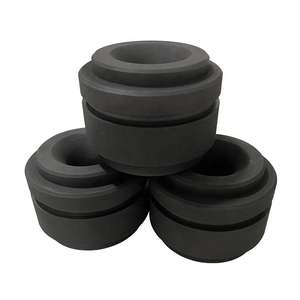
( Silicon Carbide Ceramics)
6. Response Adhered Silicon Carbide. For applications that need no porosity and the greatest possible rigidity, we make use of the distinct procedure of Reaction Bonding. This is a two-step alchemy. Initially, we develop a permeable preform from a mixture of Silicon Carbide and carbon. Then, we infiltrate this preform with liquified silicon. The silicon responds with the carbon, developing new Silicon Carbide sitting, which binds the initial fragments together. The unreacted silicon fills the remaining pores, producing a composite that is completely thick and impenetrable. This procedure leads to a product that is incredibly hard and has a high Youthful’s modulus. Reaction Adhered Silicon Carbide is the product of selection for high-precision optical mirrors and elements that need to be totally nonporous to gases and fluids. It represents the peak of our design capabilities, permitting us to produce elements that are both lightweight and unbelievably solid.
7. Global Impact: The Unnoticeable Facilities
The impact of our Silicon Carbide Ceramics expands far past the. It is woven into the material of international facilities, silently supporting the systems that maintain our world running efficiently. From the depths of the earth to the edge of area, our materials are the unhonored heroes of modern life. We measure our success not in sales figures, but in the millions of gallons of tidy water refined, the billions of miles driven safely, and the numerous lives shielded.
Energy and Environment. In the oil and gas market, equipment is subjected to some of the toughest conditions possible. Boring mud, sand, and harsh chemicals integrate to destroy conventional metal parts in an issue of weeks. Our Silicon Carbide ceramics are the service to this problem. Utilized in pump seals, bearings, and valve parts, our porcelains last 10 times longer than tungsten carbide. This decreases downtime, stops ecological catastrophes brought on by leaks, and saves the sector billions of dollars every year. Additionally, in the nuclear power sector, our ceramics serve as essential elements in gas pellets and cladding. Their capacity to withstand high radiation dosages and severe temperatures makes them important for the risk-free operation of nuclear reactors, giving an obstacle which contains radioactive product and secures the atmosphere.
Transport and Electrification. The automotive market is undertaking a seismic shift in the direction of electrification, and Silicon Carbide is at the heart of this makeover. While the globe focuses on Silicon Carbide semiconductors for power electronics, our structural ceramics play a vital duty in the physical components of electrical lorries. We offer high-performance brake discs and clutches that offer exceptional quiting power and put on resistance. Additionally, our porcelains are used in the manufacturing of diesel particulate filters, which catch soot and reduce exhausts from heavy-duty trucks. As the world relocates in the direction of a greener future, our materials are assisting to clean the air and reduce the carbon impact of transport. In the realm of high-speed rail, our porcelains are utilized in bearing components that minimize friction and rise efficiency, allowing trains to travel faster and quieter than ever.
Protection and Room. Maybe the most visible effect of our technology is in the realm of protection and aerospace. In the army, Silicon Carbide is the material of choice for ballistic shield. It is among minority materials with the ability of stopping high-velocity projectiles while staying light adequate to be used by a soldier. Our shield plates supply life-saving protection for armed forces personnel and police officers all over the world. In the aerospace industry, our ceramics are made use of in the leading edges of hypersonic lorries and re-entry guards. They have to endure the searing heat of climatic reentry, where temperature levels can go beyond 2000 ° C. We are the guard that shields humankind’s travelers as they press the boundaries of rate and altitude, venturing into the vacuum cleaner of room and returning safely to earth.
8. Future Vision: Past the Perspective
As we aim to the future, our vision for Silicon Carbide Ceramics is one of convergence. We see a world where the line between architectural products and digital parts blurs. The exact same crystal lattice that gives our porcelains their mechanical strength also gives them exceptional digital buildings. We are on the cusp of a new period where our materials will not just support technology, however actively take part in it.
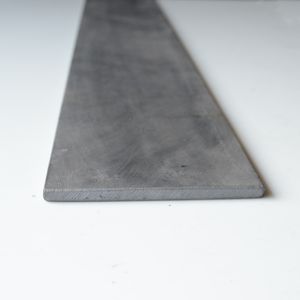
( Silicon Carbide Ceramics)
Assimilation with Semiconductors. The increase of Silicon Carbide as a third-generation semiconductor is a trend we are accepting wholeheartedly. While our architectural porcelains have actually been safeguarding machinery for years, we currently see a future where these 2 worlds clash. We are establishing crossbreed parts that incorporate the thermal conductivity of our ceramics with the electronic buildings of SiC wafers. Envision a heat sink that is not just an easy cooler, yet an active component of the wiring. This combination will certainly reinvent power electronics, permitting smaller, extra effective tools that can operate at higher temperature levels and voltages. Our vision is to be the product supplier for the future generation of electric grids, electric automobiles, and renewable resource systems.
Quantum Products. Beyond timeless electronic devices, Silicon Carbide is emerging as a celebrity gamer in the quantum revolution. Current research has actually revealed that defects in the SiC crystal latticework, known as color centers, can act as qubits, the building blocks of quantum computer systems. Our study division is focused on producing ultra-high purity Silicon Carbide crystals with controlled problem densities. We aim to provide the product structure for the quantum net, where information is transmitted safely over cross countries using the principles of quantum entanglement. This is the frontier of our brand’s future, a location where we are not just constructing materials, however constructing the future of computer and interaction.
Sustainable Production. Our vision for the future is additionally specified by our commitment to the planet. We are committed to developing sintering processes that are more power effective and use recycled materials. By shutting the loophole on product usage, we guarantee that the shield of the future does not come with the expenditure of the atmosphere. We are buying eco-friendly innovations that decrease our carbon footprint and lessen waste. Our objective is to be a carbon-neutral maker, proving that industrial toughness and ecological responsibility can exist together. Our team believe that the future comes from companies that can introduce without depleting the planet’s sources, and we are leading the fee in lasting porcelains making.
TRUNNANO chief executive officer Roger Luo claimed:”Silicon Carbide is the physical symptom of strength. Our mission is to guarantee that when the world presses its limits, our technology exists to hold the line.”
9. Distributor
Tanki New Materials Co.Ltd. focus on the research and development, production and sales of ceramic products, serving the electronics, ceramics, chemical and other industries. Since its establishment in 2015, the company has been committed to providing customers with the best products and services, and has become a leader in the industry through continuous technological innovation and strict quality management.
Our products includes but not limited to Aerogel, Aluminum Nitride, Aluminum Oxide, Boron Carbide, Boron Nitride, Ceramic Crucible, Ceramic Fiber, Quartz Product, Refractory Material, Silicon Carbide, Silicon Nitride, ect. If you are interested in hbn boron nitride ceramics, please feel free to contact us.
Tags: Silicon Carbide Ceramics, Silicon Carbide Ceramic, Silicon Carbide
All articles and pictures are from the Internet. If there are any copyright issues, please contact us in time to delete.
Inquiry us